How High Should You Tee Up Your Driver?
The short answer: for most golfers, tee the ball so about half of it sits above the top edge of your driver at address, with the ball positioned opposite your lead heel. That height makes it easier to strike the ball slightly on the upswing and a little above the centre of the face, which raises launch, lowers spin and adds carry. Most golfers I coach tee it too low.
Why tee height matters: attack angle
Attack angle is whether the club is moving up or down at impact. With irons you want to hit down. With a driver, hitting slightly up is more efficient.
When you hit down on a driver, the ball launches lower with more backspin. When you hit up, it launches higher with less spin, and that combination carries further at the same swing speed.
TrackMan's tour data shows the average PGA Tour player hits slightly down on the driver, at around minus one degree, while the average LPGA Tour player hits up, at around plus three degrees. Players with less clubhead speed, which is most amateurs, gain the most from hitting up because they need help getting the ball in the air.
A low tee makes hitting up very difficult. If the ball sits low, the only way to make clean contact is to catch it on the way down.
Strike location: aim for slightly above centre
Where the ball meets the face matters as much as attack angle.
- Slightly above centre: higher launch and lower spin, thanks to the curved face of a modern driver. This is the distance sweet spot.
- Low on the face: extra spin, lower ball speed and a flight that drops out of the sky.
- Off the heel or toe: lost ball speed and extra curve.
A higher tee makes an above-centre strike more likely. Spray the face with foot powder or dry shampoo and hit five balls. The marks will tell you more than any swing thought.
Set up to match your tee height
Teeing it higher only works if your setup lets you hit up on it.
- Ball forward. Position it opposite your lead heel, so the club reaches it just after the bottom of the swing.
- Tilt away from the target. Let your trail shoulder sit lower than your lead shoulder, with your head behind the ball.
- Widen your stance. A slightly wider base helps you stay behind the ball as you swing.
- Stay behind it. Through impact your head should still be behind the ball, not chasing it towards the target.
Troubleshooting
- Skying it (pop-ups): the tee is rarely the cause. A steep swing that comes down on the ball sends it straight up off the top of the face. Keep your tee height, and feel a shallower, more rounded swing that stays behind the ball.
- Topping it: often caused by straightening up through impact or moving towards the target. Keep your posture and your tilt through the ball.
- Big slice after teeing higher: check your grip. An open clubface relative to your swing path is the cause of the slice, and a weak grip makes it worse.
How high is too high?
Under the Rules of Golf, a tee can be no longer than four inches, which is plenty for any driver. For fairway woods and hybrids off the tee, tee it much lower, with just a small part of the ball above the top of the club.
Try this: hit five balls each at three tee heights: low, half the ball above the crown, and slightly higher. Check your strike marks and ball flight for each, and keep the height that gives you the best strike, not the one that feels most comfortable at first.
Want more distance without swinging harder?
My Ultimate Driver Fix and the Perform Golf driving library cover setup, strike and attack angle step by step, so you can add distance and find more fairways. Start at perform.golf.
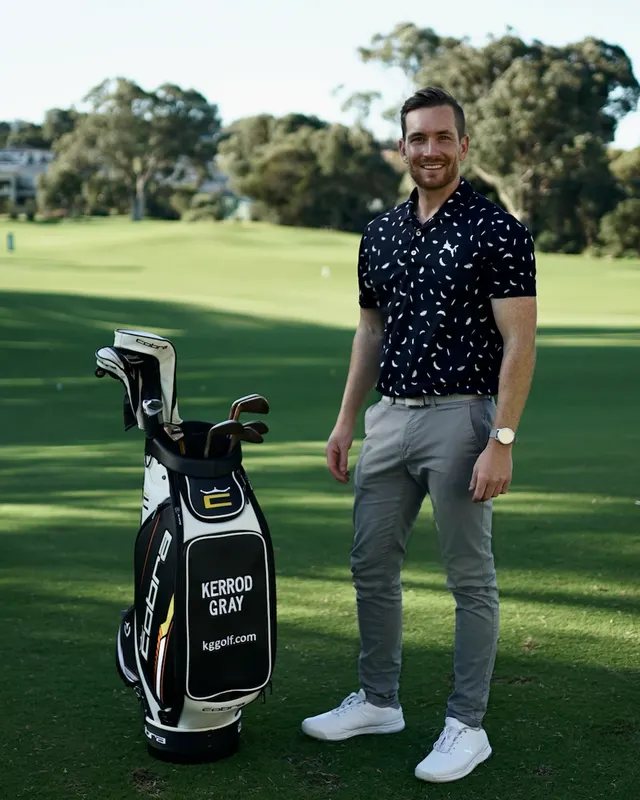
Kerrod Gray is a PGA of Australia Professional, Advanced in Coaching, and the founder of Perform Golf.
WANT A MORE CONSISTENT SWING?
Join My Mailing List To Get Access To My 3 Favourite Drills

About me
Kerrod Gray
I’m an award-winning Australian PGA Professional and the founder of Perform Golf. For more than 15 years I’ve coached golfers from all over the world, from complete beginners to touring professionals, and taught more than 20,000 lessons.
My instruction now reaches more than 450,000 golfers online, and it has been featured by GOLF.com, Australian Golf Digest and the PGA TOUR’s On The Mark podcast. Want help with your own game? Start with my free training.
ADVANCED PGA PROFESSIONAL
Free for golfers
Want a more consistent swing?
Join my mailing list and I’ll send you my 3 favorite drills, free.

Quick Links
CONTACT
© 2026 Perform | All Rights Reserved
